You Have a Company: What Comes Next for Success
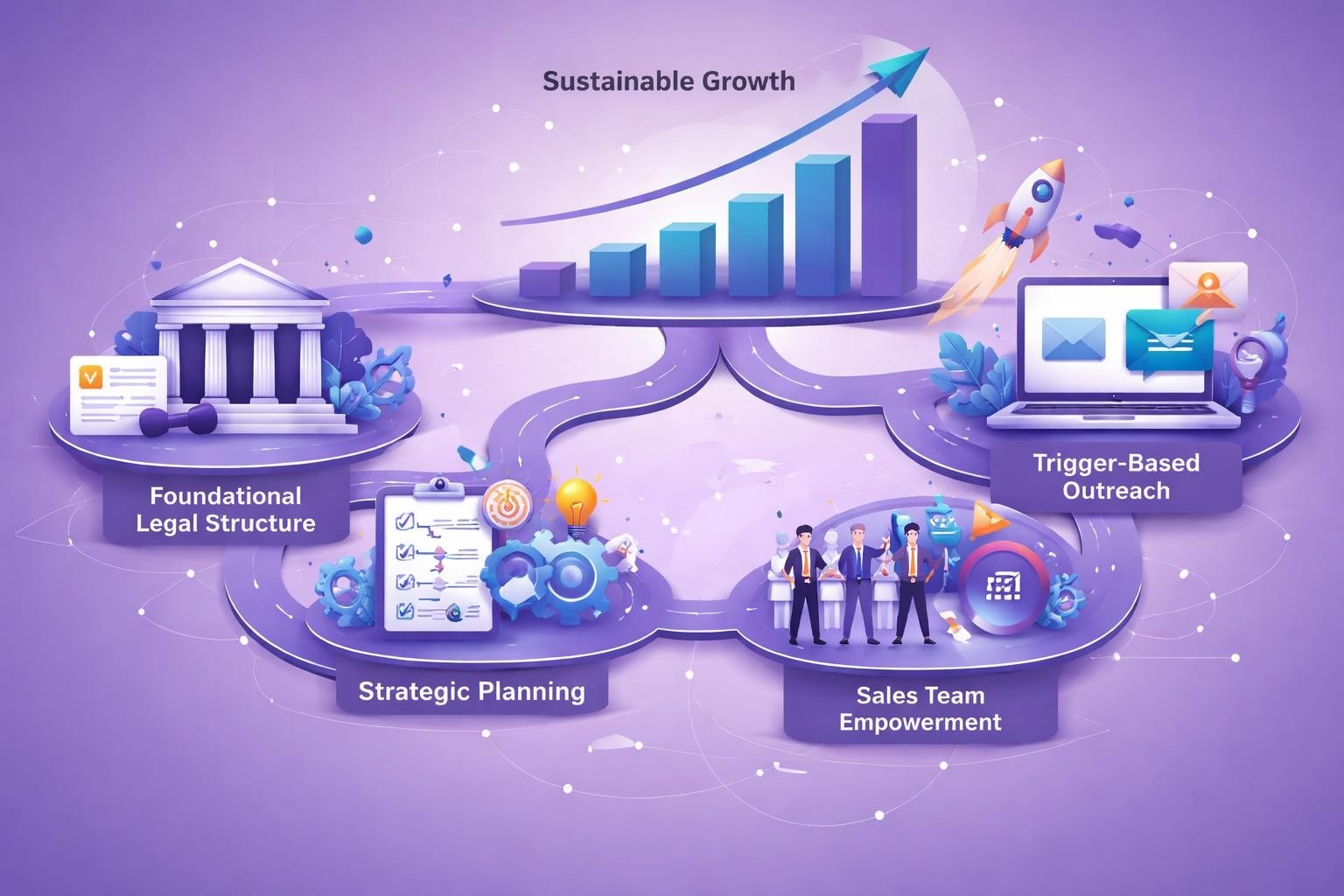
Starting a business represents one of life's most significant achievements, but the moment you realize you have a company marks the beginning of an entirely different journey. The transition from founder with an idea to owner of an operational business brings both exhilarating opportunities and sobering responsibilities. Understanding what comes next separates companies that thrive from those that merely survive. For B2B businesses operating in high-ACV markets, this transition demands strategic clarity around sales processes, legal compliance, operational efficiency, and sustainable growth mechanisms that don't sacrifice quality for volume.
Building the Foundation When You Have a Company
The legal infrastructure supporting your business determines your long-term stability and risk exposure. Once you have a company, establishing proper legal frameworks becomes non-negotiable rather than optional.
Essential Legal Requirements for Business Operations
Meeting regulatory requirements protects your business from preventable setbacks. The U.S. Small Business Administration provides comprehensive guidance covering everything from initial registration through ongoing compliance obligations.
Critical legal priorities include:
According to Wolters Kluwer's analysis of legal requirements, appointing a registered agent and obtaining an EIN rank among the most fundamental steps businesses must complete.
Business structure selection impacts everything from taxation to liability protection. Sole proprietorships offer simplicity but expose personal assets to business risks. Limited liability companies (LLCs) provide protection while maintaining operational flexibility. Corporations create separation between ownership and operations, essential for businesses planning significant fundraising.
Financial Systems That Scale With Growth
When you have a company generating revenue, financial management transforms from simple bookkeeping into strategic business intelligence. Establishing robust financial systems early prevents the chaos that undermines scaling efforts.
Financial ComponentPurposeImplementation PriorityAccounting softwareReal-time financial visibilityImmediateSeparate business accountsLegal protection and clarityImmediateRevenue tracking systemsPerformance measurementWeek oneExpense categorizationTax optimizationMonth oneCash flow forecastingStrategic planningMonth two
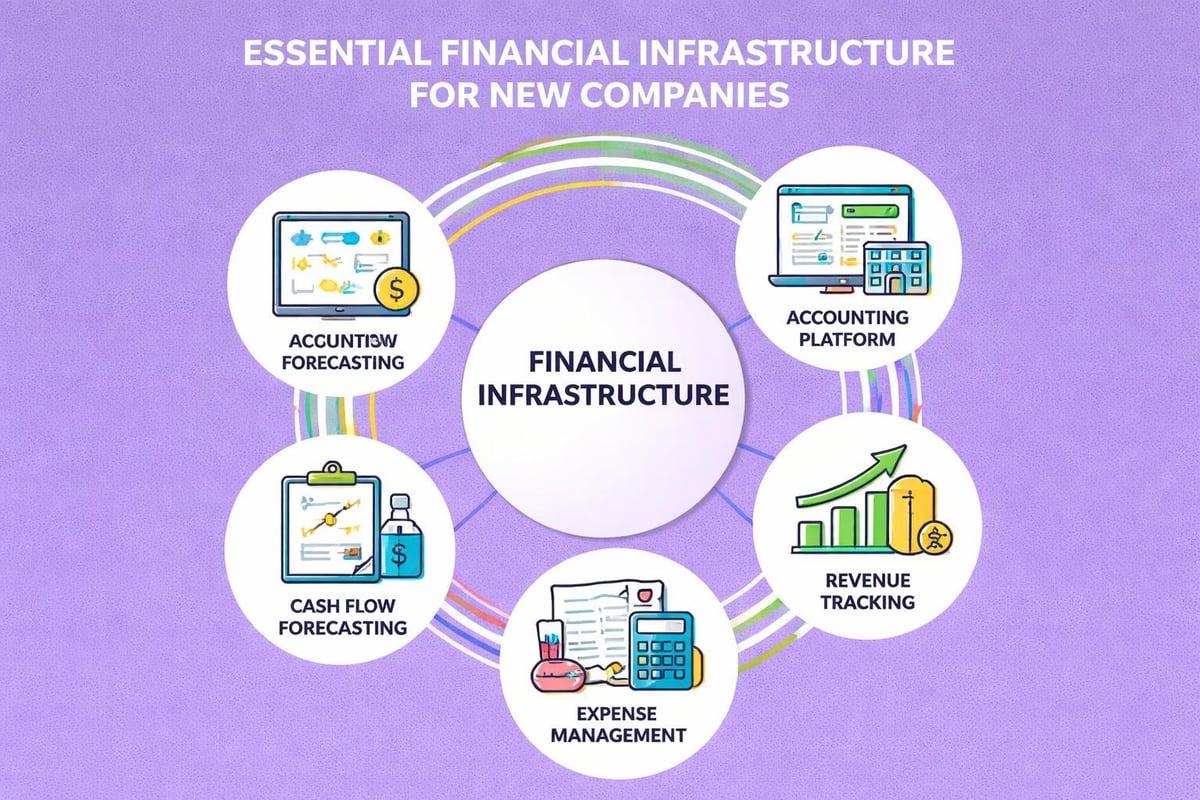
Setting up proper financial foundations enables data-driven decisions rather than intuition-based guessing. B2B companies particularly benefit from financial clarity because high-value sales cycles require understanding customer acquisition costs, lifetime value calculations, and runway projections.
Developing Sales Infrastructure for High-Value Markets
You have a company-but without systematic revenue generation, you have an expensive hobby. For businesses targeting high annual contract value (ACV) deals, sales infrastructure determines whether opportunities convert or evaporate.
The Human-Centered Approach to Sales Automation
The market overflows with AI SDR solutions promising to replace human sales teams entirely. This approach fundamentally misunderstands what drives high-value B2B sales. Technology should empower sales professionals, not replace the strategic thinking and relationship-building that close complex deals.
Effective sales automation preserves human judgment while eliminating manual busywork:
Trigger-based prospecting transforms outbound from spray-and-pray volume plays into precision timing strategies. When a prospect company announces Series B funding, your outreach arrives within hours-not weeks. When executives publish thought leadership content, your team references specific insights rather than sending generic templates.
This approach recognizes that you have a company competing in crowded markets where differentiation matters more than volume. Quality conversations with perfectly timed prospects outperform thousands of cold touches to unqualified contacts.
Building Outbound Programs That Respect Buyer Intelligence
Modern B2B buyers research extensively before engaging with sales teams. Outdated outbound strategies that ignore this reality damage brand reputation and waste resources.
Effective outbound in 2026 leverages behavioral triggers as conversation starters. LinkedIn activity provides particularly rich signal sources:
These triggers enable relevance that generic outreach cannot match. Rather than "I noticed you're a VP of Sales," messages reference "I saw your podcast appearance discussing the challenges of scaling SDR teams profitably."
The strategies that drive outbound sales success prioritize timing and context over message volume. When you have a company focused on high-ACV deals, each conversation opportunity carries significant value that demands preparation and personalization.
Scaling Operations Without Losing What Made You Successful
Growth creates complexity that threatens the agility and quality standards that defined early success. Maintaining operational excellence while scaling requires intentional systems and cultural discipline.
Process Documentation and Knowledge Management
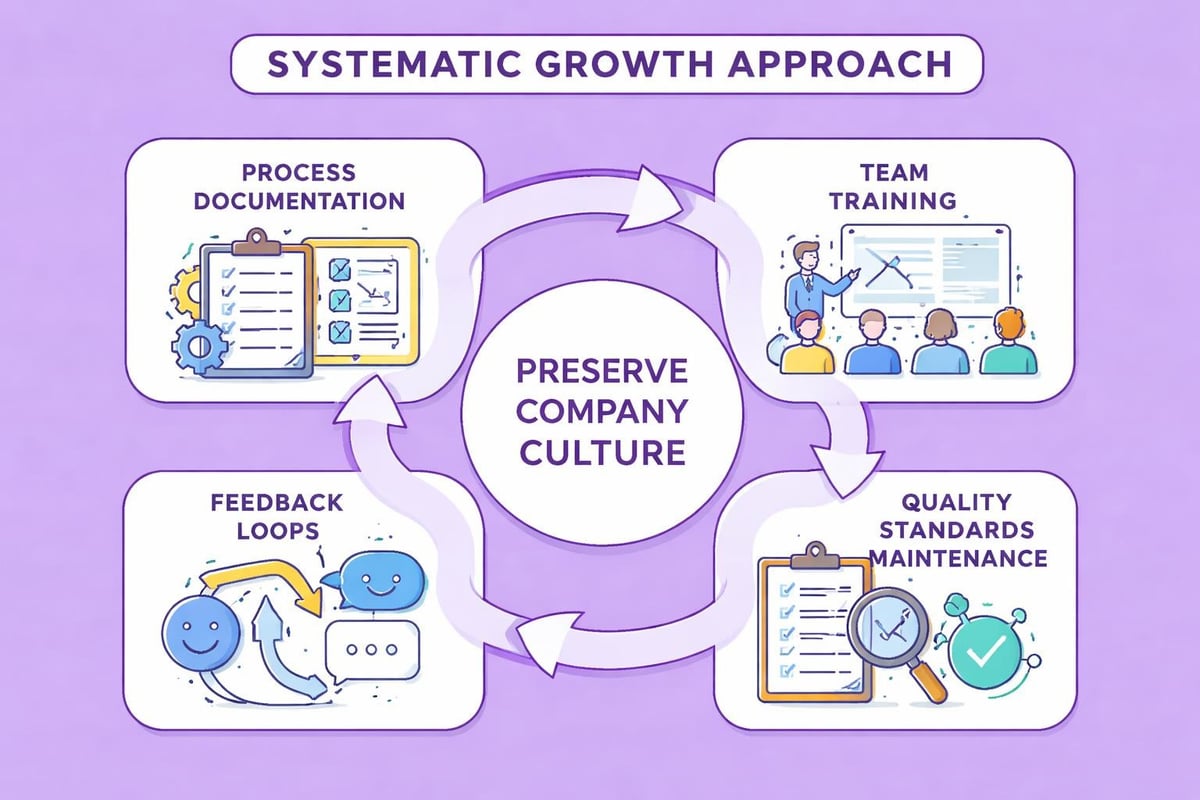
As teams expand, tribal knowledge becomes organizational liability. What exists only in founders' heads becomes inaccessible to new team members, creating bottlenecks and inconsistency.
Process CategoryDocumentation PriorityReview FrequencySales qualification criteriaCriticalMonthlyOutreach messaging frameworksCriticalQuarterlyTrigger evaluation standardsHighMonthlyCustomer onboarding proceduresHighQuarterlyInternal communication protocolsMediumSemi-annually
Documenting processes doesn't mean eliminating flexibility. Well-designed systems provide frameworks that empower judgment rather than replacing it. Sales teams benefit from trigger criteria guidelines while retaining authority to pursue exceptional opportunities that fall outside standard parameters.
Team Development and Hiring Strategy
You have a company that's growing-hiring becomes inevitable. Strategic hiring separates sustainable growth from chaotic expansion that dilutes culture and capabilities.
For B2B sales organizations, the temptation to hire aggressively when pipeline grows can backfire. Quality salespeople require training, ramping, and cultural integration. Hiring ten mediocre SDRs produces worse results than developing five exceptional ones.
Strategic hiring principles for scaling sales teams:
The Indeed guide on starting a business emphasizes proper hiring procedures, interview techniques, and employment verification-administrative details that protect companies from compliance risks.
Creating Sustainable Competitive Advantages
When you have a company in competitive markets, sustainable differentiation determines long-term viability. Temporary advantages erode quickly; systems-based differentiation compounds over time.
Data-Driven Decision Making in Sales
High-performing B2B companies instrument everything and optimize based on evidence rather than opinions. Sales teams generate massive data that remains largely unutilized in most organizations.
Metrics that drive strategic improvement:
These metrics enable continuous improvement cycles. Testing message variations, trigger sources, and outreach timing produces compounding performance gains that competitors cannot easily replicate.
Understanding how to craft personalized sales messages transforms theoretical messaging frameworks into practical, tested approaches that generate measurable response rate improvements.
Technology Stack Optimization for Efficiency
You have a company with limited resources competing against well-funded competitors. Technology choices multiply or divide team effectiveness.
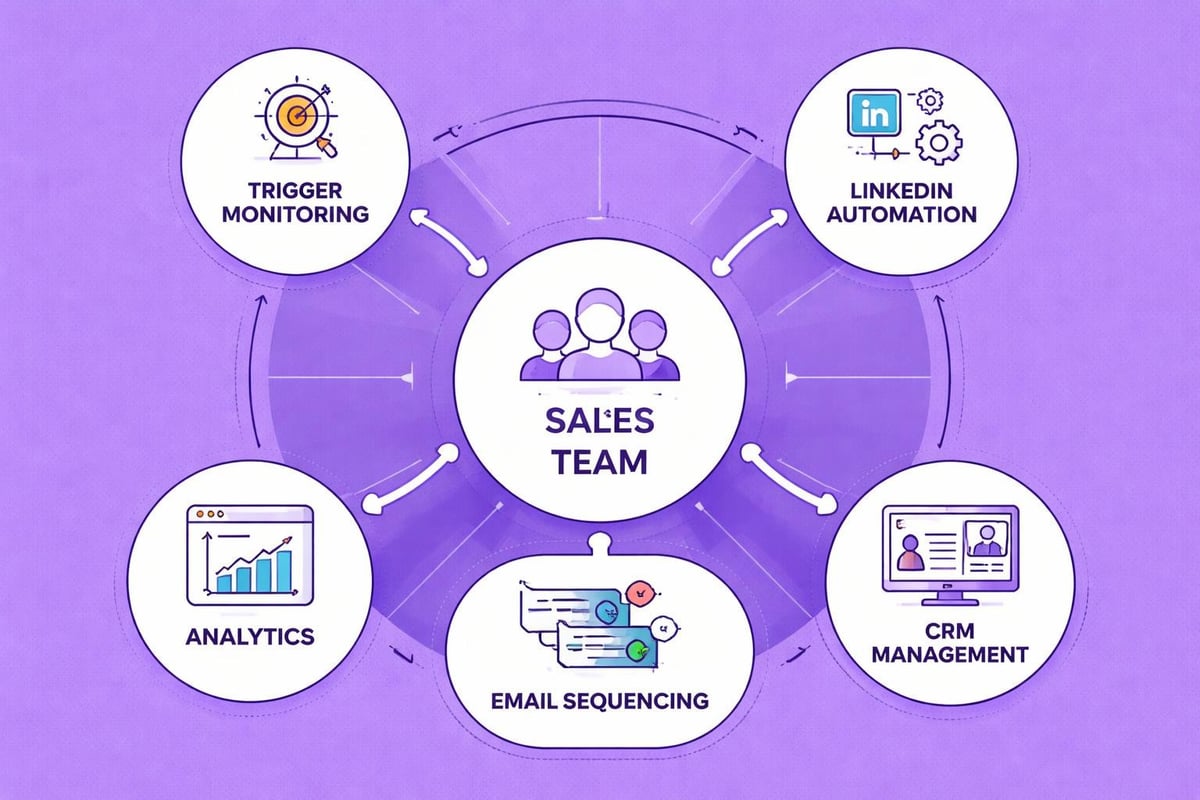
The sales technology landscape grows more complex annually. Evaluation paralysis keeps companies stuck with suboptimal tools while competitors gain efficiency advantages.
Tool CategoryStrategic PurposeIntegration PriorityTrigger monitoring platformsOpportunity identificationCriticalLinkedIn automation toolsOutreach scalingHighCRM systemsPipeline visibilityCriticalEmail sequencing platformsFollow-up consistencyHighAnalytics dashboardsPerformance optimizationMedium
Technology serves strategy rather than dictating it. Companies chase "AI-powered" solutions without evaluating whether automation aligns with their quality-focused approach. The right technology stack amplifies human judgment rather than replacing it.
Navigating Common Growth Challenges
Every growing company encounters predictable obstacles. Preparation enables proactive responses rather than reactive crisis management.
Managing Cash Flow During Rapid Growth
Counterintuitively, rapid growth often creates cash flow crises. Revenue growth requires investment in hiring, infrastructure, and operations before new revenue materializes.
B2B companies with high-ACV deals face particular challenges because long sales cycles create months between customer acquisition costs and revenue collection. A company closing $100,000 annual contracts might invest $20,000 in sales and marketing to acquire each customer-but if payment terms allow 60-day cycles, that creates significant cash requirements.
Cash flow management strategies include:
Financial planning determines which growth opportunities you can pursue versus which would threaten sustainability.
Maintaining Quality Standards Under Growth Pressure
You have a company built on quality principles, but growth creates pressure to compromise standards for short-term gains. Resisting this pressure separates enduring companies from those that flame out after initial success.
High-ticket sales strategies emphasize the importance of maintaining relationship quality and personalization even as volume increases. Prospects evaluating six-figure purchases detect and reject generic, automated outreach.
Quality maintenance requires:
Short-term revenue maximization often conflicts with long-term brand building. Companies choosing sustainable growth over quick wins build reputations that become competitive moats.
Building Systems for Long-Term Sustainability
When you have a company, thinking beyond quarterly results toward multi-year horizons enables strategic decisions that create compounding advantages.
Customer Success as Growth Engine
For B2B businesses with high-ACV customers, expansion revenue and referrals often exceed new customer acquisition as growth drivers. Customer success transforms from support function into strategic growth lever.
Successful customers become case studies, references, and expansion opportunities. Dissatisfied customers churn, require replacement acquisition, and damage market reputation through negative word-of-mouth.
Customer success priorities include:
The economics prove compelling: retaining existing customers costs far less than acquiring new ones, while expansion revenue carries minimal acquisition costs.
Thought Leadership and Brand Development
You have a company competing for attention in noisy markets. Thought leadership cuts through noise by providing genuine value rather than promotional messaging.
Publishing insights about industry trends, sharing tactical frameworks, and documenting lessons learned builds authority that supports sales conversations. When prospects research your company, substantive content demonstrates expertise more effectively than promotional copy.
Content development serves multiple strategic purposes:
The common mistakes to avoid when defining ideal customer profiles exemplifies valuable content that educates while positioning expertise.
Thought leadership compounds over time as content accumulates, authority builds, and search visibility increases. Companies starting today will dominate markets in three years if they commit to consistent, valuable publishing.
Strategic Planning for Evolving Markets
Markets evolve continuously. You have a company that must adapt while maintaining core strategic advantages.
Monitoring Competitive Landscape Changes
The explosion of AI-powered sales tools represents the most significant market shift affecting B2B outbound in decades. Companies must evaluate which innovations provide genuine advantages versus which create marginal improvements at significant cost.
Strategic technology evaluation framework:
Evaluation CriteriaAssessment QuestionDecision WeightStrategic alignmentDoes this support quality-over-quantity principles?HighIntegration complexityCan this work with existing systems?MediumTeam adoption likelihoodWill sales teams actually use this?HighROI timelineWhen do benefits exceed costs?MediumCompetitive necessityWill lacking this create disadvantage?High
Market monitoring extends beyond technology to methodology shifts. As buyers become more sophisticated, outreach approaches must evolve. What worked in 2024 generates diminishing returns in 2026.
Adapting to Regulatory Changes
Privacy regulations, anti-spam laws, and platform policy changes continuously reshape what's permissible in outbound sales. Companies operating globally navigate multiple regulatory frameworks simultaneously.
LinkedIn regularly updates automation policies. Email deliverability requirements tighten as providers combat spam. GDPR, CCPA, and emerging privacy regulations restrict data usage and contact methods.
Compliance isn't optional-it's foundational. Companies building outbound programs on policy violations create existential risks. Sustainable approaches respect platform guidelines and regulatory requirements from inception.
The legal requirements outlined by FreshBooks cover foundational compliance topics, though sales-specific regulations require additional research and often legal consultation.
Measuring Success Beyond Revenue
You have a company generating revenue, but financial metrics alone provide incomplete pictures of organizational health and trajectory.
Comprehensive Success Metrics
Balanced scorecards track multiple dimensions:
Companies optimizing single metrics create unintended consequences. Maximizing revenue growth without monitoring customer satisfaction builds churn time bombs. Maximizing efficiency without investing in team development creates capability gaps that limit future growth.
Building Learning Organizations
When you have a company, fostering continuous learning and adaptation determines long-term competitive advantage. Markets reward organizations that learn faster than competition.
Learning organizations systematize knowledge capture, sharing, and application:
The velocity of organizational learning compounds into capabilities competitors cannot easily replicate. Teams that learn, adapt, and improve continuously outperform those relying on static playbooks.
Building and scaling a company demands strategic clarity around legal foundations, sales methodology, operational excellence, and sustainable competitive advantages. The journey from startup to established business requires balancing growth ambitions with quality standards that define brand reputation. For B2B companies targeting high-value markets, Spear empowers sales teams through trigger-based prospecting that prioritizes timing and relevance over volume, keeping humans in the loop while automating the repetitive work that consumes valuable selling time.
.png)
.png)